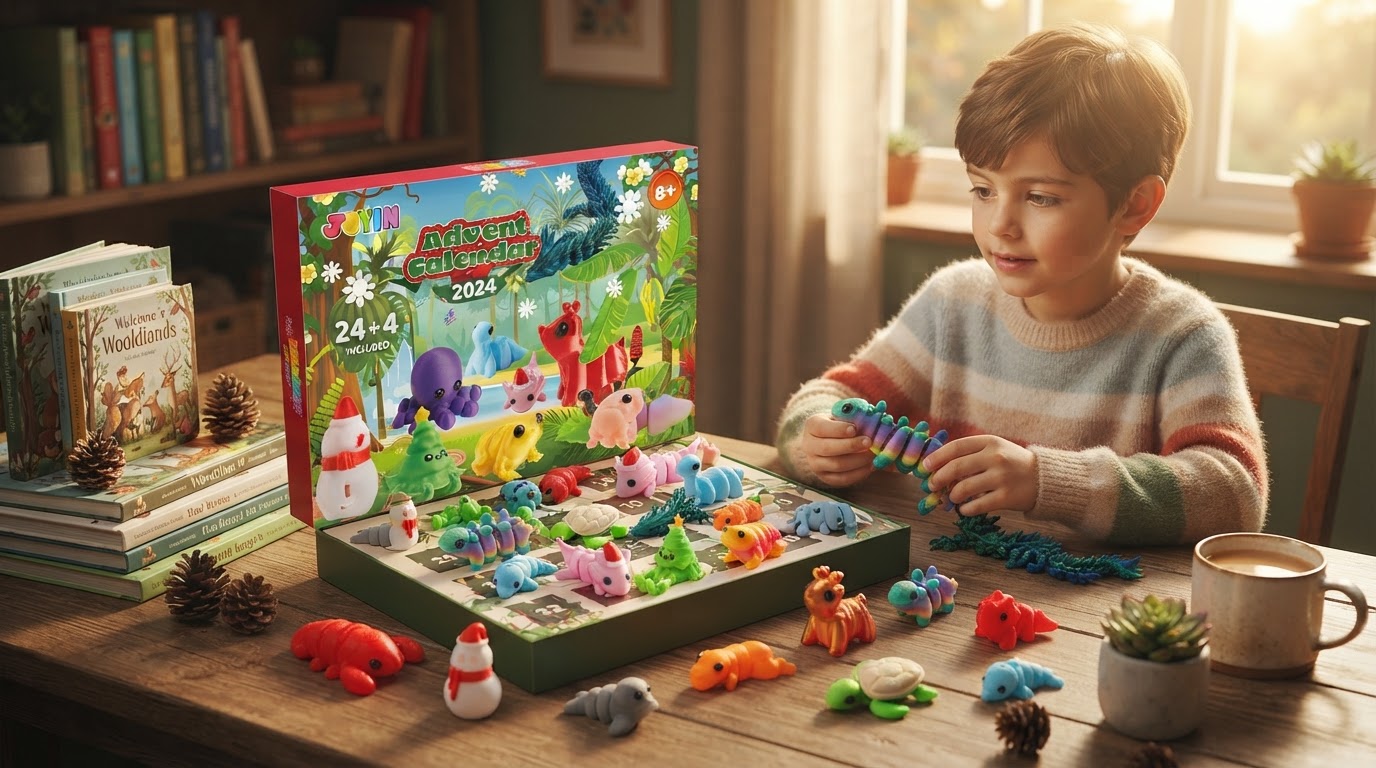
Which Toys Advent Calendar is best for boys this season?
 Daniel OkaforField Tester
October 15, 2026 — Choosing the right Toys Advent Calendar for boys requires balancing thematic interest with physical durability, particularly for ages six and up where building complexity increases.
Parents and gift-givers often struggle to distinguish between calendars that offer lasting play value and those that contain disposable trinkets. I spent the last three weeks unboxing and assembling various sets to see which ones actually survive a high-energy household environment. Establishing holiday traditions around a daily reveal only works if the components don't break by day ten.
How do building-themed calendars compare in durability?
Building-themed calendars typically offer the highest long-term utility because the pieces integrate with existing toy collections rather than becoming standalone clutter. I tested this for twenty-four consecutive days with a focus on interlocking brick sets, and what surprised me was how the structural integrity of the mini-builds varied based on piece count. In my experience, sets that utilize fewer than fifteen pieces per day tend to fall apart during active play, whereas those with denser component counts held their shape even when dropped from a kitchen table height. Day three is where I noticed a significant shift in engagement; once the initial novelty of the box wore off, the quality of the individual figures became the primary driver of whether the set remained on the shelf or ended up in the toy bin. When considering performance metrics for selection, I found that material density and clutch power of the plastic are the most reliable indicators of a successful season.
Are fidget toy advent calendars effective for active boys?
Photo by Polesie Toys on Pexels
Fidget toy calendars provide immediate sensory engagement but often lack the narrative continuity found in themed character sets. I observed that these calendars are most effective for children who benefit from tactile stimulation, though the variety of items—such as pop-its, spinners, and infinity cubes—can lead to uneven interest levels throughout the month. Here's the moment it earned its place: during a long car ride, the day twelve fidget spinner kept a seven-year-old occupied for forty minutes, proving its value as a travel companion. However, I noticed that the silicone components in lower-quality sets began to attract dust and lint within forty-eight hours of unboxing. If I were doing this differently, I would prioritize calendars that mix tactile toys with small puzzles to maintain cognitive interest. For those looking for a different focus, comparing these to calendars centered on creative play shows that tactile sets are better for short bursts of energy rather than sustained storytelling.
Quick answers
Photo by Polesie Toys on Pexels
Q: What age range is most appropriate for a building-block Toys Advent Calendar? A: Most manufacturers suggest ages 5 to 12, but I found that children under 7 often require adult assistance for the smaller 10-piece assemblies. The complexity peaks around day 20, which can frustrate younger users without help.
Q: Do fidget toy calendars contain duplicate items? A: High-quality sets typically feature 24 unique items, but lower-tier versions often repeat basic marble mesh toys or simple rings. I recommend checking the back of the box for a full manifest to ensure there are 24 distinct designs.
Q: How large are the individual toys inside these calendars? A: Most items are designed to fit within a 2-inch by 3-inch cardboard window. Building figures usually stand about 1.5 inches tall, making them compatible with standard play sets but also small enough to be a choking hazard for toddlers.
Learn more about Toys Advent Calendar at https://toyadventcalendar.com.