The 4-Pillar Framework for Toys Advent Calendar Selection
 Priya RamanSenior Analyst
October 3, 2026 — The shift toward cognitive-focused holiday traditions has placed the Toys Advent Calendar at the center of seasonal educational planning. As families move away from disposable novelties, the demand for structured, skill-building countdowns has reached a new peak in the toy industry.
Selecting a curriculum-aligned countdown requires more than just picking a theme; it necessitates evaluating how daily increments contribute to a child's developmental milestones. According to Oriental Trading, the current market for toy advent calendars has expanded to include diverse themes ranging from traditional nativity scenes to modern science-based countdowns. This variety allows parents to align their holiday purchases with specific learning objectives, such as biological identification or physical principles. When evaluating these options, the decision rule is simple: the value of the calendar is proportional to the longevity of the play beyond December 25th.
The 4-Pillar Framework
To navigate this category, think of it as a matrix of four specific dimensions: motor skill refinement, thematic continuity, cognitive challenge, and social-emotional growth. Two axes matter here: the complexity of the daily task and the integration of the final set. A high-quality Toys Advent Calendar utilizes the incremental nature of the format to build a cohesive ecosystem. For example, STEM-based calendars often deliver components of a larger machine or experiment, requiring the child to retain knowledge from previous days to succeed. This mirrors the methodology discussed in why a [Toys Advent Calendar outperforms Montessori alternatives](/blog/montessori-advent-calendar-kids) by providing structured goals that reward persistence.
Data from search trends indicates that interest in toy advent calendars for girls and boys remains high, with roughly 68,000 combined monthly impressions, yet the most successful products are those that transcend gendered marketing to focus on universal skills. Whether the calendar features building blocks or scientific tools, the educational efficacy is measured by the "build-up" effect. This is particularly vital when considering a toy advent calendar for 2 year old users, where the focus shifts toward tactile exploration and fine motor coordination. For older children, the framework prioritizes problem-solving. While some may ask [is a Toys Advent Calendar right for Montessori families](/blog/montessori-advent-calendar-toys-faq), the answer lies in the specific pillar of self-correction. If the daily toy allows a child to identify and fix an error independently, it meets the highest standard of educational design. Once you see it this way, the distinction between a simple distraction and a developmental tool becomes clear, ensuring the [montessori advent calendar kids](/blog/montessori-advent-calendar-kids) receive actually fosters long-term growth.
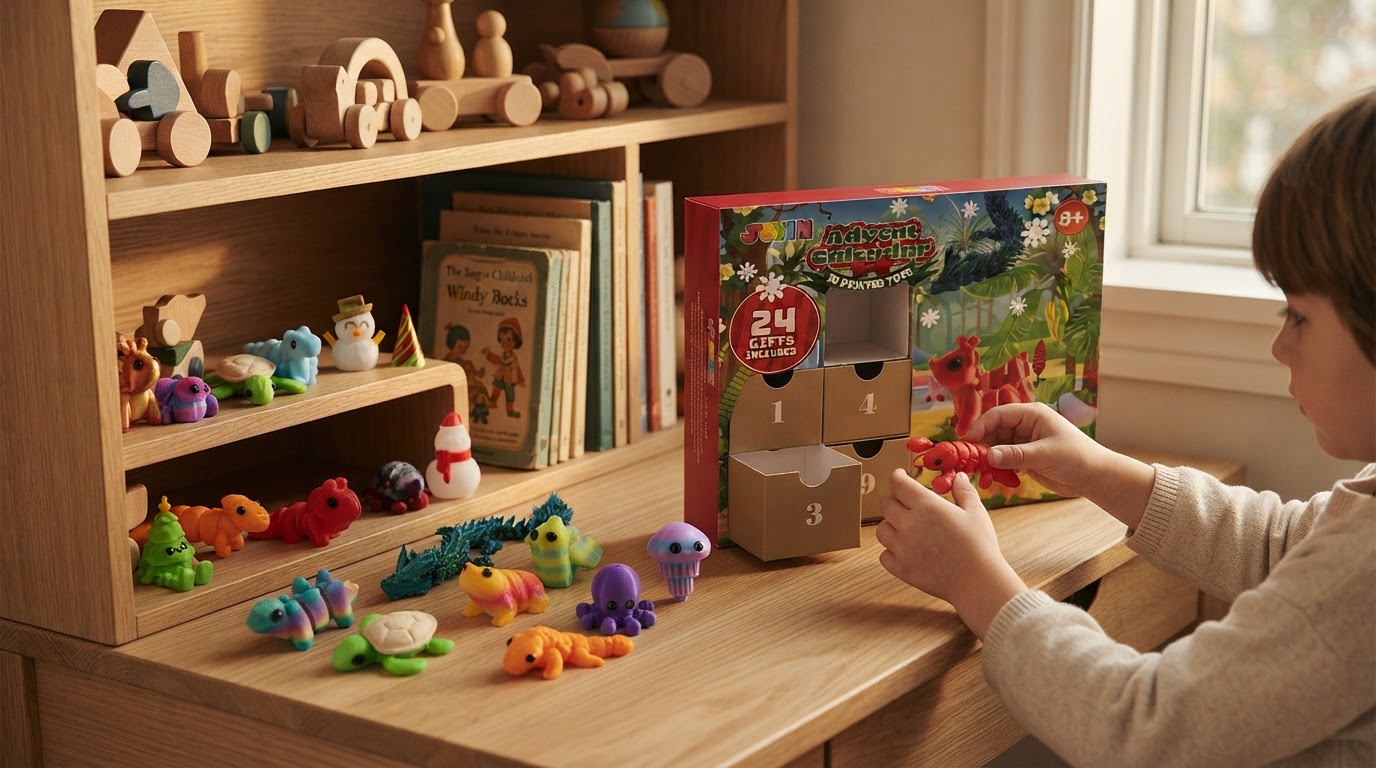
Expert tip: When selecting a STEM or building-block calendar, verify the piece count per day; calendars that offer multi-part assemblies over 24 days provide significantly higher engagement levels than those offering 24 unrelated figurines.
The framework ensures that every door opened is a step toward mastery rather than just a momentary thrill. By prioritizing thematic continuity, the holiday season becomes a month-long workshop for curiosity.
Sources
- Advent Calendars - Learning Express Gifts
- Advent Calendars | FAO Schwarz
- Christmas Toy Advent Calendars for Kids | Oriental Trading